










Outdoor areas on Mallorca – Winter garden or glass oasis - how to extend your living space
Additional living space and the opportunity to sit outside even in storms, rain or cold weather: This was the concept behind the winter gardens that were particularly popular among northern and central European homeowners in the 80s and 90s.
In Mallorca, such a demand for glass-roofed extensions never really emerged, after all, thanks to a mild Mediterranean climate, you can sit outside almost all year round. Almost, mind you. Because even on a sunny island it can get quite uncomfortable in the fall and winter. Balcony and patioüroofing made of glass can help. But what about the structural requirements for such extensions?
„Ähnlich wie beispielsweise in Deutschland unterscheidet der Gesetzgeber zwischen sogenannten thermisch getrennten und nichtthermisch getrennten Profilen“, erklärt Holger Fischer, Geschäftsfährer der auf Fenster-Installlationen, Mosquitoschutz, Markisen und Terrassenüberdachungen spezialisierten Company „f&b“ in Santa Ponsa Will mean: "A proper conservatory is the equivalent of a living space extension. The foundation, walls and roof must be built in such a way that they only generate a small amount of heat loss. For this reason, you need both an architect and the relevant permits from the town hall to build a conservatory,
says Holger Fischer.
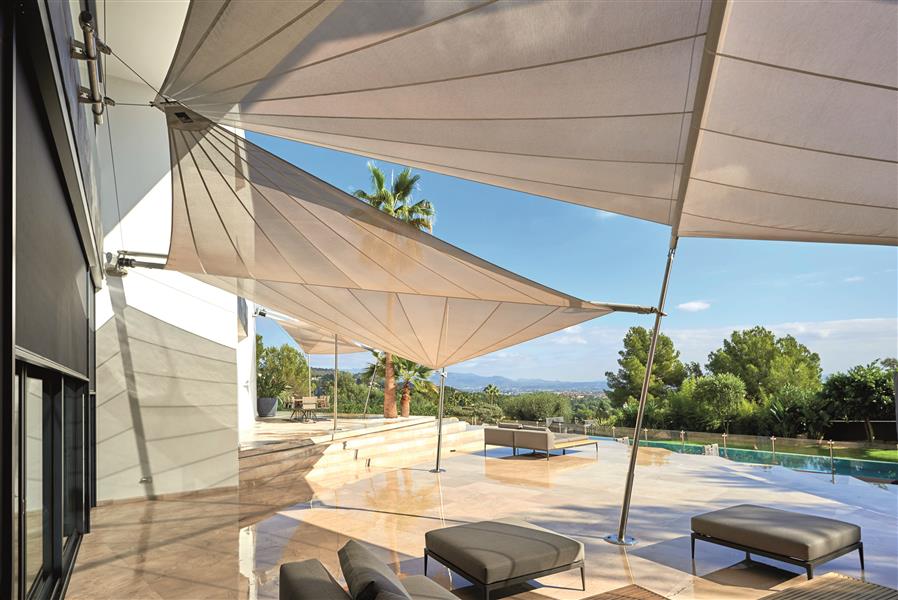
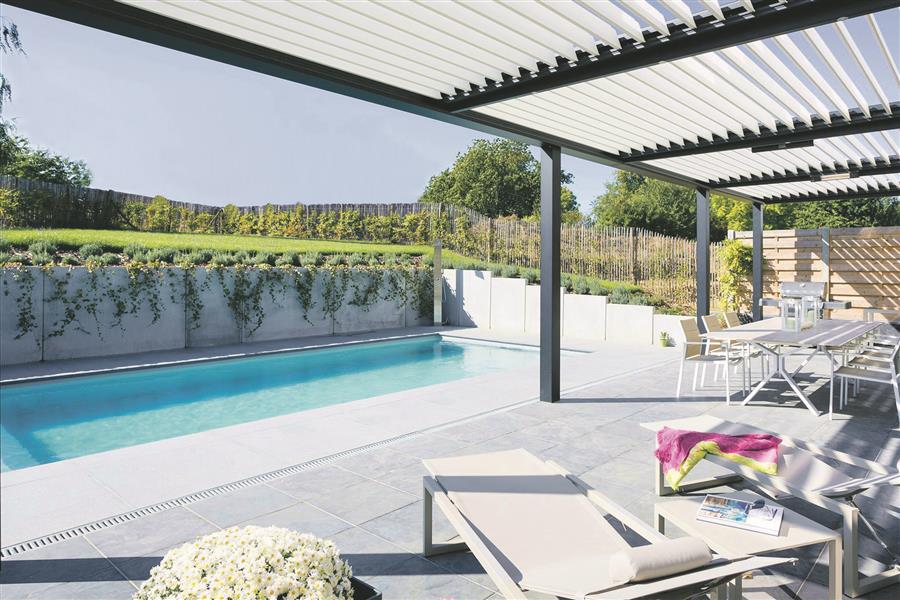
The situation is different with modular roofs for terraces. Here, too, the terrace is covered, but the construction does not have any insulating properties. Depending on the model, the roof or wall sections can even be opened or closed". On cold days in Mallorca, modern UV radiators are used for heating. In hot weather, retractable and extendable awnings provide cooling shade. Such glass oases are easy to install, do not require foundations or architectural approval and are therefore cheaper than winter gardens, explains Holger Fischer. But don't permits also have to be obtained for this type of installation? Yes and no. As they are not permanent structures with foundations or load-bearing parts and can be dismantled at any time in a matter of hours, they do not fall under the category of conventional structures. However, every municipality on the island sees things differently. If you want to be on the safe side, you should enquire about possible requirements at the respective town hall or ask an architect for legal advice".
Balcony & canopies
Roofing or converting balconies with glass or fiberglass modules is particularly popular among homeowners. You are no longer exposed to rain and wind and also gain a small amount of living space. Here too, an inquiry at the town hall could lead to inspectors taking a closer look at the construction," says Holger Fischer. Much more important, however, is the consensus with the rest of the housing association (Comunidad). The reason: if a neighboring condominium owner takes offense at the appearance of the balcony roofing, in the worst case scenario the owner will have to dismantle the structure. Incidentally, the same also applies to balcony awnings in residential or apartment buildings. "In this case, you must first ask the owners' association whether there are any requirements regarding the color of the awnings, retractable edges or size," says Holger Fischer. The aim is often to achieve a uniform appearance for the residential complex or apartment block.